A craft is something that is developed over time, something that someone does for entertainment, for fun, and something that gives depth to an individual. This could be just about anything. Making music, knitting, cooking, reading, writing...all assuming that there is some skill involved. These skills may derive from practice, they may derive from some genetic brilliance. Either way, these skills and what we do with them define us as individuals. That being said, for my birthday at the beginning of the month, I bought myself The Autobiography of Edward Gibbon. I've read it before--twice, actually--but did not pay much attention to the first 1/3 of the text.
Edward Gibbon was an 18th century historian, considered a son of the enlightenment who spent a considerable amount of time and energy writing his epic Decline and Fall of the Roman Empire. He was incredibly well educated, well derived, and well-connected through his many family acquaintances. It is about the first 80 pages of his memoirs that he introduces his purpose, that he gives his family history, and that he discusses his education. These are the beginnings of the man.
Most historical texts offer, in the beginning, an explanation of purpose. This gives the reader some understanding of the motives of the author and a basis on which to analyze the facts based on the appearance of bias. For example, a biography commissioned by the subject him/herself, for the purpose of self-interest would be expected to be filled with half-truths in the interest of promoting the good characteristics while making excuses for the bad.
Gibbon's explanation for writing his memoirs is for his own entertainment. He eludes to vanity being the reason he records what he knows of his family's history saying, "In the investigation of past events, our curiosity is stimulated by the immediate or indirect reference to ourselves..."
He was born an ill child, spending many of his young years in the home, bedridden. But, when he was well enough to enter school, he excelled at most subjects. Now this is stated by him in some regards, others of which I am inferring based on what I have read and on my own education. One thing is for sure: Things have changed. Not only was Gibbon reading and translating Latin and Classical Greek from a very young age, he positively devoured anything that he could read. As a librarian, this fills me with both joy and sorrow. If only modern American education was so good. If only education anywhere was so good.
Clearly, if you've ever read or attempted to read this man's work, you would have a much better understanding of it's brilliance and of his skill by learning about the man himself.
Let me just mention that what I've described above is only about 1/3 of the book itself. He details his brief visit with Voltaire in Lausanne and what he learned there. He describes, quickly and quite poetically, his first love. He describes the circumstances around the publication of Decline and Fall. This is a life! This is a man!
There are very few people in this world today who's works, whose importance, and whose acquaintances can be measured equally to someone like Gibbon. It seems that the time for greatness has come and gone.
In comparison, mediocrity seems to rule the world today.
Showing posts with label BAM. Show all posts
Showing posts with label BAM. Show all posts
Sunday

Tuesday
BAM-February 2008--"heart"
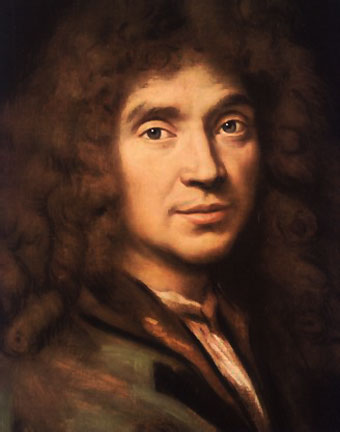
So the BAM theme for February isn't love but heart. I'm still doing Amphitryon...but not just Plautus' play. I've included Moliere's Amphitryon as well. After work on Friday, being discouraged by my experience with Plautus, I went to TitleWave to find something to replace it. I wanted a play, preferably something Greek or Roman but came across Moliere instead. I thought it would be interesting to compare the two and rail on Plautus.
There is very little difference in each of the stories. Both men were trying to convey the corruption that exists in those who hold tremendous amounts of power. The gods Jove and Mercury take the forms of Amphitryon and Sosia (the slave) respectively and reek havoc on the mortal world. Accusations fly, sanity is questioned, hearts are broken...of course they are mended again with not much more than a word from Jove.
Here's my synopsis of the final scene (of both plays):
Jove: You are the real Amphitryon. I am Jove. My son Mercury took the form of your slave Sosia to trick you.
Sosia: *whew* I thought I was going crazy
Jove: I slept with your wife. You should be pleased. I mean, I did have to take your form and all. Besides, one of your sons is actually mine! You'll have to feed him and take care of him and be responsible for him. He'll always be doing things that seem stupid and dangerous and you'll worry about him even though he's my son and I'm always looking out for him. So don't worry.
Amphitryon: Oh, now that you put it that way, my wife isn't an evil adulteress. If she thought it was me then I guess it's okay. I'm not made at her or at you anymore. Thanks, Jove!
The Moliere play was significantly better. It was written in lyrical form. It was more clever. There were fewer asides to the audience (though some of those speeches in Plautus were quite amusing). All-in-all, Moliere was just more pleasant to read.
Besides, if Voltaire thinks it's funny, who is anyone to argue?
Friday
BAM February--Love, part I.
I'm reading the play Amphitryon by Plautus. I'm not big on Roman drama (though I do love me some Greeks) and I don't really like this modern translation, but it's pretty funny so far. And I learned a new word, one that I will adopt in conversations regarding myself: inamorata. Of course, you have to say it like an Italian or it's not quite so pretty.
...more to come.
...more to come.
Thursday
BAM January 08

The Book a Month Challenge for this month is TIME.
I've decided to merge my responsibilities to read a possible Young Reader's Choice book with this challenge. I've read the Children's Fiction title "How to Speak Dragonese" by Cressida Cowell. It is part of a series of books that documents the misadventures of a young viking pirate-to-be, his comrades, and their dragons.
In this story, Hiccup Horrendous Haddock III (our young hero) and his friends get separated from the rest of their "Boarding and Enemy Ship" classmates to discover a legion Roman soldiers lingering off shore. Now, the Romans must have underestimated the young crew because, after capturing them the Fat Consul and the Thin Prefect reveal to Hiccup their Fiendishly Clever Plan steal all of the Hooligan's (that's the tribe that Hiccup belongs to) dragons.
At this point the story returns to Hiccup's education. Even though he and his friends escape the Roman ship and they return to shore, their teachers, who value the more barbaric aspects of the viking-pirate life (one illustration shows Hiccups report card and the curriculum consists of burping, frightening foreigners, sword-fighting, advanced rudery, hammerthrowing...) are thoroughly disappointed. The ultimate theme: brain vs brawn.
With the will of his superiors against him, can Hiccup stop the Roman's Fiendishly Clever Plan?
I always enjoy a good twisted history.
Subscribe to:
Posts (Atom)
